Search This Blog

Sunday, February 08, 2015

Eighth vehicle - 1973 Triumph TR6

After my first Navy technical school in San Diego, I was going to be sent to Great Lakes Naval Training Station, just north of Chicago, Illinois.  This training would last for a couple of months.

Following the school in Chicago would come a six month school in Orlando, Florida.  After I finished class in Orlando would come the final school, a six month class in upstate New York.

At that time, the only transportation I had was the unreliable but wickedly fast KH 500 motorcycle, which I was NOT going to ride on a long distance trip, ever again.  Instead I had the bike shipped back to Idaho, which cost about as much as I paid for the motorcycle.  A high school friend kept the bike for me as I flew from school to school.

In the Chicago area I didn't mind being without transportation; they a have wonderful commuter train system there.  Things changed when I got to Orlando, however.  There wasn't much opportunity to get out and explore places without a vehicle.  Soon enough I began looking for sports cars in the newspaper.  Eventually I found a 'decent' 1973 TR-6.  It needed a bit of work.

It looked about like this, right down to the aftermarket wheels that I very much disliked.

I was very fortunate that Orlando (And later, San Diego Sub Base) had "Auto Hobby Shops".  These were places where you could rent a stall on a daily or weekly basis, borrow tools, and repair or maintain your car - if you didn't happen to be out to sea.  I don't know if the Navy still does this, but for me and my problematic vehicles, it was a Godsend.

The first problem with the new TR-6 was the front brake rotors.  They were massively warped, so slowing the car down was pretty exciting (and I don't mean "fun" exciting).  While braking, the steering wheel would start rapidly pulling one way and then the other, all the while the car was shimmying to a stop.  I had the brake rotors turned for the price of a six pack of Budweiser, and the brakes were never an issue again.

Next was the ominous "clunk" whenever you got on the gas or let off the gas.  I jacked the car up and found that the Independent Rear Suspension universal joints were sloppy.  I ordered replacements, and as soon as they arrived I removed the old universal joints.  A universal joint is supposed to look like the one below:

The TR6 being a Florida car had a fair bit of rust, but where I found the most rust was where the Needle Roller bearings once were.  I found rust powder and a few loose rusty pins that looked like they might have once been needle bearings.  Once I replaced the universal joints the car handled and ran pretty well... but it still had those god-awful magnesium wheels.

After a lot of scraping and saving, I replaced the awful smaller rims with stock rims and new Michelin radials.  The car didn't corner as well, because it now sat slightly higher, but it looked and ran right, finally!

 I drove this car from Orlando, Florida to upstate New York with no problem whatsoever.  I drove it all over in both places.  It was a great little car once I got all the problems ironed out.  It didn't even have any electrical fires!

For reasons I can no longer recall, I decided to trade this car in on a brand new Ford Mustang GT...

... but this was not to be, because Ford Motor Credit wouldn't front me the money.  Their loss on a car sale and on the interest they would have earned from making the loan.

Instead, General Motors was willing to make an auto loan to me, and so they got to sell a (slightly used) car.  This one.


Seventh vehicle - 1976 Kawasaki KH 500

The seventh vehicle that I owned, and bought in 1980, I still have today - it has been my baby since shortly after high school.  That is the 1976 KH 500 (link is to a 1974). The engine in this bike is the notorious two-stroke Kawasaki Triple.  Wikipedia says this about it:

Sixth vehicle - 1978 Kawasaki KE125

The sixth vehicle I owned was a brand-new Kawasaki KE125.  This was an awful, under-powered motorcycle with a six speed transmission (to make the most of its meager 13 horsepower).  This was a dual-purpose bike.  It had suspension and tires for off-road, but it also had a headlight, horn and turn signals.  That way you didn't need to haul the motorcycle to the off-road trail in the back of your truck (which I didn't have).

The bike looked like this:

There were a couple of good things about this bike.  It got me around reliably, and without too much expense.  But the most important thing about this bike is that it taught me that I was dreadful at riding off-road.  I didn't own it very long, and did not miss it in any way.

Fifth vehicle - 1969 Triumph TR-6

Possibly one of the coolest cars I ever owned was a Triumph TR-6.  There was a lot to like about the Triumph.  It had a 2500cc inline 6 cylinder pushrod engine that had a ton of torque, and developed 125 horsepower.  The car had wonderful handling and was pretty reliable, in spite of the Lucas electrical system.

Part of the reason the little TR-6 handled so well was because it had independent rear suspension. Most rear-wheel drive cars have a solid rear axle and a differential.  The solid axle means that whenever one of the rear wheels hits an irregularity in the road, part of that force is transmitted across the axle to the opposite rear wheel, and this does nothing for handling.

Below, a typical solid rear axle with differential.  These are tough and strong, but they don't have great handling.

An independent rear suspension (IRS) has two half-axles, connected to the differential through a pair of universal joints.  Each rear wheel can move up or down with the road surface, and not impact the other wheel's up/down motion.  This reduces chassis roll whenever one wheel hits a bump or a dip, and contributes to a huge improvement in the vehicle's handling and road grip.

Below is a video of a guy driving his later TR-6 through his neighborhood (It has the fugly federally-mandated 5 MPH rubber bumper guards).  At about the 5:25 mark he gets on the gas a little and the inline 6 makes that awesome sound.


My first TR-6 (I have owned three of them now) looked just like this.  Notice the bumper doesn't have the goofy rubber things that you saw in the video.

The TR-6 has a nice open and simple engine bay.  Front is right.

The car had some serious electrical issues, as British cars usually do.  When I first bought it, I didn't notice that the ammeter constantly was showing a slightly negative current flow.  After I had owned it for about a week, the car died suddenly, and I was clueless as to the reason.  I got a buddy to bring me some gas.  It started, but only ran for a little bit before dying when I turned on the headlights. That's when I figured out the charging system had an issue.  After getting a spare charged battery, I was able to drive it home.

The charging system had two issues:  A fried rectifier and a fried solid-state voltage regulator.  A very knowledgeable friend helped me identify and then correct both issues without having to buy expensive parts.  The rectifier we replaced three diodes on, and the voltage regulator we replaced with a Chrysler mechanical type that cost $3 at the junkyard.

The Chrysler regulator is simple and rugged.  As the voltage gets too high, an electromagnet pulls a contact open, which de-energizes the alternator field winding.  When system voltage drops back to normal, a spring pulls the contact closed, re-energizing the alternator.  This happens several times per second, and you get a fairly constant output voltage.  Tabs to adjust the spring tension adjusts the 12V output voltage.

With that fixed, I had many years of happy motoring in the TR-6.  One thing it always did was pull to the right a little bit, and clunked when I turned hard right.  I never understood why this was until after I had sold it.  The guy who bought it came back and told me that the upper A-Arm mount was broken off from the frame.  I honestly didn't know what he was talking about, because I didn't know anything about suspension at the time.  Hopefully he got it welded for cheap.

Another time one night, I went to go somewhere in the TR-6.  As soon as I turned the key in the ignition, massive amounts of smoke started pouring of the dash.  I shut off the ignition and checked under the dash, but could still see wiring glowing red-hot under there.  I quickly popped open the hood and disconnected the battery before the car could burn to the ground.

The following day I looked under the dash and found a few burned up wires, and wrapped them in elecrical tape, so they could not touch one another.  Crossing my fingers, I re-connected the battery.  Happily there was no further smoke, the car started fine, and everything electrical still worked.  It was just a weird isolated electrical event.

Below is the international warning symbol that the TR-6 contains British electrical components.


One of the things I liked about this car was the cool fuel filler - the design was right out off the race track.  It was spring-loaded had a quick-release lever, so that when you moved the lever with your thumb, the cap would pop open.  Also, it was located in the middle of the rear deck of the car, so you could fuel from either side.

None of these pictures give you an idea how small and nimble these cars are, so here's a perspective shot.  I'm not sure what's going on with this guy's hand - maybe it's slipping into another dimension...

I loved that little car.  It had enough torque that if you were decelerating in first gear and then stomped on the gas, the car would squat down in back and chirp the rear tires.  After I sold it, I missed it so much that after a couple of years I bought another one.  And later on, I bought a third.  I may get another one at some point.

Saturday, February 07, 2015

Fourth vehicle - 1969 MGC GT

The third car I had access to (alas, I didn't own it) was a 1969 MGC GT.  This was a highly unreliable car that was super-fun to drive whenever I could get it to run.  A friend of my mother's had left it with us while she was on sabbatical for a year.  I took care of it for her by keeping it running and repairing it when it needed to be fixed, which was most of the time.

During that period of time, the MGB was one of the most common sports cars around.  If you said you had an MG, people would assume you had a B.  The MGB had a 4 cylinder 1800cc pushrod engine that developed 95 HP.  Not too shabby for such a small and light weight car.

On the odd occasion you might see an older MGA.  You will likely never see a MGC, and if you do, they are easy to mistake for a B.  Only minor differences in the hood (to accommodate the 3000 cc straight six engine) and the badge identify it.

1956 MGA

1966 MGB

1966 MGC.  The only difference is the hood - and what's underneath!

Here's the difference:
MGB: 4 cylinder 1800cc 95 Horsepower

MGC: 6 cylinder 2900cc 145 Horsepower

Unfortunately the inline 6 cylinder engine weighed about 200 lbs more than the 4 cylinder one.  The car under-steered... a lot.  It got a poor reputation for handling, but with modern tires it apparently makes a fine machine.  The engine had lots of room for performance improvement and modded versions can make about 30% more power reliably.  These cars are now quite rare and collectible.

Driving this car was like being in a go-kart.  It felt like you were barely off the pavement, and it had an awesome-sounding exhaust.  Factory dual exhausts, in fact!  I learned how to synchronize carburetors on this machine, and learned a little about British automotive electrical systems (they suck).  The car's battery was two 6 volt cells.  One battery in a compartment behind each seat, connected in series for 12 volts.  The batteries were back there to improve weight distribution and handling, on account of the heavy engine.

The MGB and MGC came in two body styles - the roadster (convertible) and the GT (Gran Turismo, or hatchback).  The one I had the opportunity to drive was a GT.  It looked identical to the one below.  A very tiny and fun car!

It was a very cool car to drive - when it ran.  I loved it.


One really bad experience I had though, was when the left front wheel came off.  The wheels are held in place by a screw-on center spinner cap that you tighten up using a brass mallet (supplied with the car).  The wheel has very shallow splines to keep it from spinning around on the hub.  On this occasion the splines wore out, and when I put on the brakes, the hub stopped, but the wheel did not, because hub and wheel splines were sliding over each other.  It made an alarming growling sound as the splines wore down - and then the wheel popped off the car.

Below, the parts that almost bankrupted a teenage kid back in the 1970s.


Fortunately the accident didn't cause any damage to the bodywork.  I still had to replace the wheel (splines ruined), the brake rotor (the car fell on it), and the hub (splines ruined).  Of course none of the damaged MGC parts were the same as the more common MGB :)  It was hugely expensive, and the replacement parts took a long time to arrive.  Fortunately I got it all back together and didn't have to explain anything to the absent owner.

Third vehicle - 1968 Mercury Cougar

I purchased my second car, a 1968 Mercury Cougar, from my mom for $500.  The Credit Union loaned me the money because she didn't have the finances to lend me money and still replace the Cougar.  That car was about 10 years old with 110,000 miles on it when I began driving it, and by that point the engine was ready for major work.  The valve guides were shot, and the rest of the engine probably wasn't too far behind.  Not Detroit's strongest materials back then.

I had pretty much grown up with this car.  My mom bought it after her and dad divorced, and all our travels had been done in it.  So I knew it was well taken care of, and never abused (at least until I got it).  The Cougar was very reliable, and it had an awesome heater in it... so it made an excellent ski vehicle.  The car weighed a lot, and had a low-performance Ford 289-2V (2V = 2 venturi carburetor) engine, so it was a dog.  The handling and fuel economy weren't that great either.  But as I said, it was reliable and had a great heater.

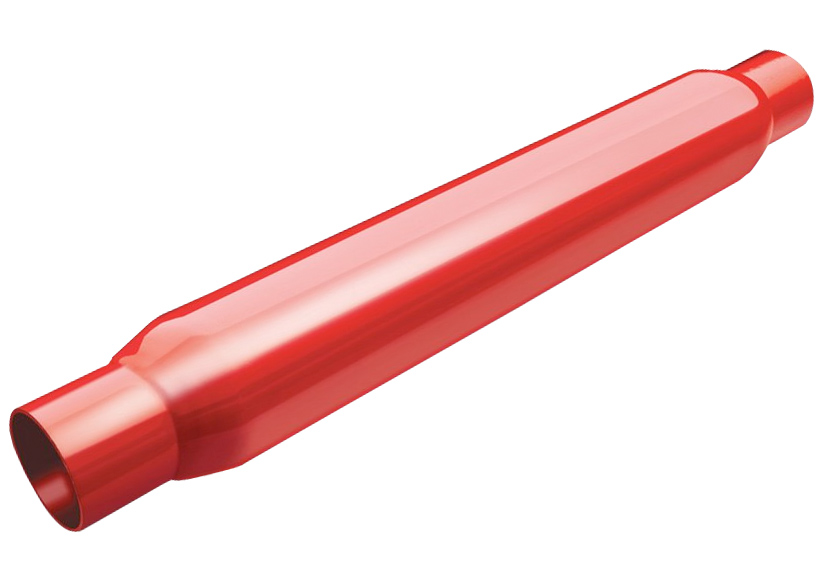
There was always something I wanted to do, but could never afford to:  Make it a fire-breathing hot rod.  What I *could* afford was to cut off the muffler and clamp a single glass-pack muffler to the combined exhaust pipe.  It was a pretty stupid move.  The new muffler hung low under the car, as I never bothered to suspend it.  The car actually performed worse, and the noise was an indistinct deep gargle.  Definitely not the crackling sound of a high performance motor.

The car had some pretty cool features that were rare in the day.  It had headlight covers that rolled up, and the rear turn signals sequenced three lights.  You could always hear a little motor running the sequencer across each electrical contact, somewhere back in the trunk, when the turn signal was on. Apparently they now make a solid-state sequencer.

Below is a video showing off all the cool stuff on the exterior of a 68 Cougar.  I wouldn't open the hood of my Cougar for a video either.  There's nothing to brag about in the engine bay unless you had the 390-4V or 428-4V, in which case this car would be in somebody's collection :)


My car looked more like the one below, except it had a black vinyl roof.  Who came up with the idea of putting plastics on the roof?  They eventually get weathered and develop a million cracks, then fall to pieces.  One thing is certain, my Cougar *never* sounded as good as the one in the video above.

To open the trunk on this car, you had to rotate the "Cougar" emblem on the trunk to expose the lock.  The fuel filler cap was behind the rear license plate, which rotated down for fueling.  A spring pulled  it back into place when fueling was completed.  Pretty cool touches, I think.


The old Coug always had one really annoying problem that I never got fixed, and that was the side windows wouldn't seal at the top front (The "A" Pillar).  Any time you took the car to a car wash, you had to take a passenger along to hold a washcloth up to the window so that water would not pour down inside the car door.  There was a ton of black goop at the leaking spot where someone (car dealer???) had tried to fix the leaks , but apparently they eventually gave up and sold it to my mom.

Eventually I sold this car to a friend whose T-Bird's motor had died.  By then I had a replacement that I was able to "borrow", and which got me involved in a long-running interest in sports cars.

Second vehicle - 1958 BMW Isetta 300

I received my driver's license at the tender age of 14 after taking a summer driver's education class. That same summer, I bought my very first car for $600.  At the time I was earning money throwing newspapers onto people's doorsteps.

The vehicle that I was really was interested in was a 1968 Toyota FJ40 Landcruiser, and the 'For Sale' sign indicated that the Toyota owner also wanted $600.  The darn Toyota owner would never answer his phone, and this was in the era before answering machines.  The car I bought instead was a 1958 BMW Isetta.  It was insanely small, cute and nerdy.  It also seldom ran.

This car had a sunroof that was covered by a canvas flap.  The car stunk of treated canvas, not unlike a military tent.  To open the door, you twisted the handle.  To latch the door, you twisted it back, like latching the door on a cheap metal cabinet - there was no spring-return.  The steering wheel was mounted to the dash structure in a collar, and the entire steering column swung out with the door by pivoting on a universal joint.  The gear shift was on the LEFT side of the driver, sticking out of the side panel.  I think the shift pattern was backwards too - first gear was forward and right.

Let me cut to the chase.  This car was an utter piece of crap.  The engine was a low-compression 300cc air-cooled single cylinder, which is barely enough to propel a man on a small motorbike.  It's certainly not enough engine to push something with much more weight and frontal area down the road.  I once tried to find out the top speed of the Isetta, and got it up to about 50 mph before weird burning odors started wafting up out of the engine compartment.

Below, driver's view from the Isetta.  You've gotta love that windshield defroster nozzle!  Notice the lack of a fuel gauge.  The Isetta has a normal/reserve fuel selector on the ledge behind the seat.  It isn't labeled which is normal and which is reserve, so it's wise to keep the tank pretty full.

Just behind the top middle of the seat you can see the un-labeled fuel selector.  Is selected to normal or reserve?  It's a mystery until you run out of fuel!

The headlights on the Isetta (no matter how many times I tightened them) liked to get loose and twist straight up whenever they were bumped.  They were bumped every single time a passenger got in the car with me.  They also worked their way upward as the car drove over bumps.

I mentioned that the car almost never ran.  The reason for this was mostly due to the Bing carburetor, for which parts were difficult to find, and for which tuning was next to impossible.  The final fix was to install a carburetor that came from a scrapped Yamaha motorcycle.  In this way I was able to get the Isetta running long enough to sell.  That was one of the happier days of my teenage years.

For some reason everyone thinks these cars have three wheels, and maybe some do.  Mine did not.  It had four wheels, although the rear pair were pretty close together.  They were driven on a solid axle by a chain in an oil bath.  The close spacing of the wheels eliminated the need for a rear differential, because the rear tires would not rotate at much different speeds while turning.

Cary Grant actually owned one of these things.  I wonder how long he kept it?  Days?

The Isetta experience forever tainted my opinion of BMW.  I always laugh when I see how BMW marketing has created a "discriminating driver" sports/luxury machine (lease) niche.  I think I will pass on those...

 I absolutely adore the look of the 3.0 CSI, but it's unlikely I will ever own another BMW.

First Vehicle - The Sporting Goods Store mini-bike

I am going to do a series of posts about the various motor vehicles I have owned.  I'll also try to remember everything I liked/disliked about each one.

The first motorized vehicle I ever owned was a mini-bike that was powered by a 3 HP Briggs & Stratton engine.  It was a pretty blue color with white wheels.  It always started up.  It did give me a REALLY bad habit though.  Because the brake lever was on the left handlebar, I of course got in the habit of thinking of the left lever as the brake.  On actual motorcycles with gearboxes, the left lever is the clutch, which does *nothing* to slow you down - even when you panic and pull it really hard.  You might even find yourself crashing into a rose bush due to some ingrained mini-bike habits...  just sayin'.

The only operating issue I ever had with that mini-bike was getting flats due to driving over goat-heads.  Mini-bikes aren't street-legal so you have to stay on dirt trails that contain goat-head seeds.

Below is the motorcycle I managed to ride into a rose bush - a 1973 Yamaha 175 Enduro.  A neighbor allowed me to ride it around in his yard.  Brake lever is on the RIGHT side.


Heating with wood

The second house I owned, we had built.  I decided to have a free-standing wood stove installed, and even had the builder design a special alcove for it, so that the stove wouldn't take a bite out of the living room.  It also kept the hot surfaces well away from people.

That stove was magnificent, easily heating a 2700 sq.ft. house out on the cold, windy high desert.  It saved us a ton of money when the price of natural gas spiked to over $10.00 MMBTU, back in the early 2000s.  When everyone was suffering with awful heating bills, we heated the house all winter for very little money.  We were able to get a cord of hot-burning, low-ash hardwood (Almond) for about $180/cord, which lasted most of the winter.  That's what a lot of people were paying each month heating with natural gas.

This is the model we had.  Our model had the gold-plate door, but had black legs.

The next house we lived in had a real brick masonry fireplace, which was fitted with natural gas and artificial logs.  It was useless for home heating.  I enjoyed heating with wood and also enjoyed not being mugged by the natural gas utility company.  Unfortunately in that house I could not install a free-standing stove, and so we had to make do with a wood-burning fireplace insert.    It didn't put out nearly the amount of heat that the wood stove did.  To help compensate, it was fitted with a fan which blew air from underneath, around the firebox, and out into the room. The fan was quite noisy, and the wood-burning insert used a lot more wood to make a lot less heat.

This unit is similar to the one we installed.  The fan mounts down at floor level, under the lip.

A wood-burning insert fan.  These come with a variable-speed control knob (right side), so you can decide how much howling you are willing to put up with to get a little heat out of the fireplace.  On a positive note, it has a thermal switch (center) to shut the fan off after the fire goes out.


The house we are currently in uses a heat pump for HVAC.  I am not really happy with the heat pump, because it's about 20% short on capacity for this size house.  It's a 5 ton unit and it really should be 6 to 6.5 tons.  We don't use it very much for cooling, because it usually gets cool enough overnight to get by with window fans.  In the winter months though, we keep the house pretty cool, and we still have enormous electric bills.  I would like to fix that.

The house also has a zero-clearance gas (propane) fireplace that you turn on by using a wall switch. It looks cheap, even though it's surrounded by very nice masonry and a beautiful mantle.  For heating though, it's pretty much useless.

Below, not my installation, but the fireplace insert looks just like that...  and yes it also has a spot for a howling fan.

I don't have space for a free-standing wood stove in this house, because it would take a big chunk out of the living room.  Wood stoves require quite a bit of clearance to prevent radiant heat from starting fires.  And yet... I like heating with wood.  There is a lot of it here.  Furthermore we know a few people who wouldn't mind having their property cleaned up and would give us the wood.

I have been investigating the alternatives, and thought perhaps this is what I should consider:  A wood furnace.

A wood furnace works by putting a great deal of wood inside the firebox, and allowing an electronics package to control the burn rate.  The firebox is surrounded by a water jacket, and the fire heats the water, which circulates from the firebox through underground tubes to a heat exchanger in your furnace.  The fan in your home's furnace blows air across the heat exchanger and warms the air and distributes it throughout your house.   The cooler water returns to the firebox to be re-heated.

Here's the overall diagram that shows how the installation works.

Image showing the supply and return tubing, insulation and protective sheath.

The wood furnace water is above the temperature your hot water heater puts out, so you can install a heat exchanger on it as well, saving even more electricity.


Below, a diagram showing how the wood furnace interfaces with the hot water heater.


Interestingly, they make wood furnaces with dual pumps, so that you can heat multiple buildings (or a garage) with a single furnace.  You simply add a second loop and another heat exchanger for your other building.  I'm really interested in this arrangement because wood stoves and wood-burning fireplace inserts have some drawbacks that are eliminated.

If you have ever heated with wood, you know about the mess.  The wood you bring into the house always has leaves, dirt, bark, and bugs on it.  Sorry, I don't inspect each log I bring into the house for cleanliness - not if am hauling in 5-10 per day.  Then there is ash.  You have to clean out the stove, and it's pretty messy.  Half of the stuff gets airborne (especially if you are doing a hot clean-out and the ashes are still glowing).  The other half of the ash gets on the hearth and has to be vacuumed afterwards.  I caught a vacuum cleaner on fire once and ruined it, when I sucked up a glowing ember :)

Then there is the issue of cleaning the flue annually to prevent chimney fires - followed by the hazard of having a months-long fire in your living space.  That increases the potential for carbon monoxide poisoning.  I actually kinda like the idea of keeping the fire, toxic gases, ash and bugs (dead or otherwise) outside of the house.

Perhaps the best part of wood heating is that you avoid using fossil fuel, while switching to fuel that is local.  With wood heating, you can be much more independent from electricity prices, fossil fuel production and distribution prices, from taxes on fossil fuel, and from international events that could have a huge impact on fossil fuel delivery/prices.


Saturday, January 31, 2015

Adrenaline Junkies

I am an adrenaline junky, but I've now fallen enough times to know my limitations and develop an aversion to chronic pain.  On the other hand, I really enjoy the video clips of people with less fear than I have...  These are pretty amazing to watch in full screen mode.

This guy makes a really cool move at 2:05 to scrub off some speed before entering a tight turn.


An oldie, but still pretty intense.


How about some raw speed at very close quarters?