A nice report from the Christian Science Monitor precedes the latest NAR existing home sales data. The home sales data has actually rattled the markets today - and I've always been told that the markets are forward-looking. Any investor who didn't see the housing train wreck coming probably last had their investment money in beanie babies.
Here's what the CSM had to say: (My comments are in italics)
By Erik Spanberg, Correspondent of The Christian Science Monitor Mon Sep 25, 4:00 AM ET
Many homeowners who scrambled into the arms of an adjustable-rate mortgage over the past few years are now reconsidering their relationship. Adjustable-rate mortgages (ARMs) entice buyers with lower introductory interest rates - sometimes fixed for a limited period of months or years, sometimes not. That rate changes at a designated time based on any one of several indexes.
Simply put, an ARM is attractive to borrowers with spotty credit records as well as those trying to buy a house that's more expensive than they could typically afford. (If you cannot afford it, you cannot afford it. The ARM simply masks this by moving the inevitable higher payments into the future) ARMs can also be a good fit for buyers who plan to live in a house for a limited time.
Whatever the scenario, the adjustable portion of these loans has proved difficult this year as interest rates increased. ARMs account for 25 percent of home loans across the country and the struggles of homeowners are only likely to grow through 2007 as more ARMs reach the adjustment period, analysts predict.
"People who take ARMs are more risk-tolerant," says Doug Duncan, chief economist at the Mortgage Bankers Association in Washington, D.C. (Either that or they fail to understand the level of risk that they are taking) Earlier this month, the MBA reported delinquency rates on home loans for the second quarter of this year. As expected, the percentage of homeowners with ARMs unable to make payments on time increased in comparison with the first quarter of 2006 as well as the same period last year.
In addition, the rate and number of adjustable-loan delinquencies continued to outpace fixed-rate loans by a wide margin. Experts offer several suggestions for ARM-holders feeling the pinch of loans resetting at new, higher rates. Among the options: refinancing to a fixed-rate loan (works if you are not upside-down), negotiating better terms with your current lender (works if your lender is willing), or selling the house and downsizing to a more manageable mortgage (works if housing is selling - which it is *not*), or even renting property for the short term (works if rent more or less covers the mortgage). In short, a lot of people with ARMS may be out of options.
In each case, the key - as in every aspect of financial matters - is preparation. Financial planners and other experts begin each answer with a few words of advice: Take control - fast!
Taking a look at an easy hypothetical mortgage, it quickly becomes evident how difficult the current landscape can be for buyers. For someone who took out a three-year ARM for $200,000 in 2003 to buy a home, for example, the change could go something like this: With a Treasury index, what started with a 4 to 4.5 percent interest rate (stable for three years under terms of the ARM) would have adjusted for the first time this year, likely spiking to 7.5 percent - and adding $400 or so to the monthly payment. (The time to have considered this ARM adjustment was in 2003 - before signing the loan document! Where did people think interest rates were headed from a 50 year low???)
Even with an immediate switch to a fixed-rate mortgage, that buyer would still feel significant pain: closing costs of $3,000 or so (which could be rolled into the new loan) and a fixed rate of 6.5 percent or so would be an improvement, to be sure, but still a significant jump from the introductory ARM rate.
"Before you face that first adjustment, the first thing you need to do is give yourself several months to maneuver and figure out what your options are," says Greg McBride, senior financial analyst at Bankrate.com, a popular personal finance website. "Go pull out your loan documents and see what the index and margins are. It's all spelled out in the documents."
From there, a blizzard of factors and questions must be assessed and answered: How much can you afford? How long do you plan to live in your house? How willing are you to downsize? What is your current lender willing to do for you?
This last point should be analyzed in comparison with other lenders' offers. Experts suggest soliciting rates and terms from three outside lenders to gain perspective on whether the current lender is making a satisfactory offer.
In addition to getting an early head start (Bankrate.com and other sites offer projections and calculators at no cost to help buyers determine what impact an ARM's adjustment will likely have on monthly payments), experts urge homeowners to be realistic in their assessments.
If, for example, you plan on selling your house in a year or so, refinancing would be ludicrous - there would be no chance of recouping the cost.
As for the notion of refinancing a current ARM for a new ARM, forget it. "That's not a good idea, because you're just rolling the dice again," Mr. McBride says. "It's delaying the inevitable, unless you sign a contract with the Yankees or win the lottery." Exactly my thoughts on getting the first ARM
In recent years, ARMs have become more intricate. In part, the lower upfront payments that adjustable loans carry helped spike homeownership to record levels. To spur even more business, the residential real estate industry began offering more complex ARMs, including ones that require only a minimum monthly payment, much like credit cards, as well as mortgages that have the homeowner pay down interest but none of the principal.
In other cases, the terms of the fixed period vary widely. The interest rate may adjust as soon as one month after the loan starts - and keep changing throughout the life of the ARM. "It takes a trained financial person, a trained accounting person, and a trained legal mind to understand some of these mortgages," says Susan Wachter, a former assistant HUD secretary in the Clinton administration. "It's complicated." If it's complicated, that's probably because it's designed to screw you financially - so beware :)
Even a more traditional version with, for example, a two-year fixed rate can cause problems for homeowners when interest rates are on a steady rise, as they have been of late. The reason is simple, as a report compiled earlier this year by the Federal Reserve spells out: Many buyers don't understand how an adjustable mortgage works, which means they're rarely prepared to - or can't - handle unanticipated higher payment schedules.
Even when they do understand the ARM concept, borrowers tend to underestimate the amount by which their interest rates can change, according to Federal Reserve research. A sizable number of adjustable-rate borrowers don't know the terms of their loans at all.
As homeowners consider their options in the face of refinancing their ARMs, it's worth remembering a bit of old-school advice. "We always recommend the fixed-rate mortgage, because you know what your payments are," says Jeff Blyskal, senior editor at Consumer Reports. "And as you move up in your career, it becomes much more affordable."

An advertisement-free blog about motorcycling, Northern life, home improvement, power plants, submarines, nuclear stuff, and a few other off-beat subjects. Comments are welcome. (Image is the Selway Crags in Northern Idaho)
Monday, September 25, 2006


Sunday, September 24, 2006
Horsepower!
I've been commuting on the new bike for a couple of weeks now, and gone on a weekday ride up to Kernville for lunch one morning. It's been quite an eye-opener. I'm still quite impressed with the handling, acceleration and braking of the new bike. It's unreal how sticky the tires are.
I like that it's quiet, and small as the fairing is, how much of the wind it blocks when you lie down on the tank. On the old bike I was totally exposed and would find myself chilled through at temperatures that aren't currently bothering me much.
Yesterday I left a stop sign and decided to let it wail through first gear at full throttle, and found myself doing a loooong (150-ish ft) low wheelie from 40-70 mph. It didn't last long time-wise (perhaps 1/2 second), but distance-wise, it was a long time to have no steering input. A little scary, but harmless fun, as I was still outside of town in betweeen alfalfa fields.
7.5 seconds to 125 mph. Unreal - at least for me... the motorbike testers were less than impressed with the 2005 Honda CBR1000. Look Here
After riding a co-worker's R6 Yamaha, I have to agree that the weight is a factor in cornering. That R6 is like flinging a bicycle into a curve - no effort. Still, I dig the power (145 HP) and the looks of the Repsol color scheme. Maybe it's a pretender compared to a similar Ducati or Suzuki, but it's certainly potent enough for me!
I like that it's quiet, and small as the fairing is, how much of the wind it blocks when you lie down on the tank. On the old bike I was totally exposed and would find myself chilled through at temperatures that aren't currently bothering me much.
Yesterday I left a stop sign and decided to let it wail through first gear at full throttle, and found myself doing a loooong (150-ish ft) low wheelie from 40-70 mph. It didn't last long time-wise (perhaps 1/2 second), but distance-wise, it was a long time to have no steering input. A little scary, but harmless fun, as I was still outside of town in betweeen alfalfa fields.
7.5 seconds to 125 mph. Unreal - at least for me... the motorbike testers were less than impressed with the 2005 Honda CBR1000. Look Here
After riding a co-worker's R6 Yamaha, I have to agree that the weight is a factor in cornering. That R6 is like flinging a bicycle into a curve - no effort. Still, I dig the power (145 HP) and the looks of the Repsol color scheme. Maybe it's a pretender compared to a similar Ducati or Suzuki, but it's certainly potent enough for me!
Wednesday, September 13, 2006
Easy Credit - a revelation
I'm not the sharpest tool in the shed. I'm just a guy with an Idaho public school education, a bit of college, and a few technical schools. Yeah, OK I have an IQ in the mid 120's, but other than *that* I'm a fairly normal guy. I'm definitely not too quick on the uptake...
Which leads me to today's musing about easy credit and my inability to recognize it while being slapped in the face by it, hahaha.
My wife loves Home and Garden Television, and watches it religiously. Back in 2002 I recall watching one 'home makeover' program with her in which a couple was renovating their family room with a "budget of $40,000". She suddenly looked at me and asked, "Who has $40k lying around to redo one room of their house?" I said, "I dunno. Maybe they inherited some money." Looking back, I realize that this was my first inkling of what has gone so wrong with our economy. I started to pay more attention to how much money these home-owners were spending on their renovations. In show after show, people who seemed less affluent than I am were spending *way* more money than seemed appropriate for their means.
In my own little slice of paradise (Bakersfield - HA!), more and more people of ordinary means seemed to be able to afford Hummers, Bimmers, Mercedes', and Lexus'. Suddenly everyone was buying new motorboats, RVs, custom rods and Harleys, too.
I didn't understand where everyone was coming up with all this disposable income. It never occured to me that it wasn't 'income' at all, but borrowing. Interestingly I had the opportunity for an early understanding of the great credit bubble, but I failed to grasp the extent of it.
In 2003 (along with most of the rest of the country) I decided to refinance my house. I was interested in a 15 yr mortgage at the lowest interest rate I could get. I ended up paying a couple of points and got a 15yr fixed rate at 4%. Here was my chance for understanding the sudden appearance of Harleys and Hummers in front of oilfield workers homes: The mortgage guy I talked to had asked if I "wanted any cash" or needed to pay off credit cards which I could also tack on to the loan. Having no credit card debt, I answered "no", and thought no further about it.
Fast forward to 2005. I'm two years into paying off my mortgage, and driving a tired (but paid for) 1995 pickup to work. My co-workers had been buying McMansions and new vehicles galore, yet we all earn approximately the same wages. I finally stumbled across a couple of the blogs linked in column to the right and understanding ensued.
What I had apparently witnessed was herd behavior during a massive credit expansion. I had been completely oblivious to the source of the credit (in spite of the mortgage guy's question), while puzzling over the rampant and obvious symptoms.
Fast forward to today. Everyone who wants one has a Lexus, BMW and a boat. They're all "paid for" too! People have the titles to these vehicles in their name. Yet they also have more long-term mortgage debt. Some folks will be paying for these vehicles for 30 years - long after the vehicles are obsolete and the kids have worn them out.
How did individuals in this country become so fearless about taking on crippling levels of debt? Easy credit and low interest rates make it easy to justify taking on debt, but why so much excess? Consider the in-your-face consumption that typifies the 5000 sqft McMansion with matching Hummers in the driveway...
Now, I can see some folks arguing that people taking on long-term debt to finance current consumption may not be all that bad, if it's at historically low rates. In many ways it makes sense to borrow as much as you can at as low a rate as you can. So why can't I shake this deep sense of foreboding about what seems to be such reckless and irresponsible borrowing and spending?
Which brings up another (related) thought: This county has a large military force occupying Iraq. It's an expensive project, because the military contributes nothing to the US economy. On the contrary; a military occupation is a hugely expensive drain on a nation's economy. How are we paying for it, without anyone seemingly having to endure the slightest economic pain - e.g. taxes? The answer, of course, is that the pain has merely been delayed. The war *will* be paid for - not just in blood, but in the overall economy. The US taxpayer, like it or not, will pay for this military action - if not in taxes, in devalued dollars, reduced spending power, and a lower quality of life.
It took 5 years for the economic fallout from the spending debacle in Vietnam and the Great Society to hit the average American, as stagflation took hold. It took another 5 years to recover from it.
Which leads me to today's musing about easy credit and my inability to recognize it while being slapped in the face by it, hahaha.
My wife loves Home and Garden Television, and watches it religiously. Back in 2002 I recall watching one 'home makeover' program with her in which a couple was renovating their family room with a "budget of $40,000". She suddenly looked at me and asked, "Who has $40k lying around to redo one room of their house?" I said, "I dunno. Maybe they inherited some money." Looking back, I realize that this was my first inkling of what has gone so wrong with our economy. I started to pay more attention to how much money these home-owners were spending on their renovations. In show after show, people who seemed less affluent than I am were spending *way* more money than seemed appropriate for their means.
In my own little slice of paradise (Bakersfield - HA!), more and more people of ordinary means seemed to be able to afford Hummers, Bimmers, Mercedes', and Lexus'. Suddenly everyone was buying new motorboats, RVs, custom rods and Harleys, too.
I didn't understand where everyone was coming up with all this disposable income. It never occured to me that it wasn't 'income' at all, but borrowing. Interestingly I had the opportunity for an early understanding of the great credit bubble, but I failed to grasp the extent of it.
In 2003 (along with most of the rest of the country) I decided to refinance my house. I was interested in a 15 yr mortgage at the lowest interest rate I could get. I ended up paying a couple of points and got a 15yr fixed rate at 4%. Here was my chance for understanding the sudden appearance of Harleys and Hummers in front of oilfield workers homes: The mortgage guy I talked to had asked if I "wanted any cash" or needed to pay off credit cards which I could also tack on to the loan. Having no credit card debt, I answered "no", and thought no further about it.
Fast forward to 2005. I'm two years into paying off my mortgage, and driving a tired (but paid for) 1995 pickup to work. My co-workers had been buying McMansions and new vehicles galore, yet we all earn approximately the same wages. I finally stumbled across a couple of the blogs linked in column to the right and understanding ensued.
What I had apparently witnessed was herd behavior during a massive credit expansion. I had been completely oblivious to the source of the credit (in spite of the mortgage guy's question), while puzzling over the rampant and obvious symptoms.
Fast forward to today. Everyone who wants one has a Lexus, BMW and a boat. They're all "paid for" too! People have the titles to these vehicles in their name. Yet they also have more long-term mortgage debt. Some folks will be paying for these vehicles for 30 years - long after the vehicles are obsolete and the kids have worn them out.
How did individuals in this country become so fearless about taking on crippling levels of debt? Easy credit and low interest rates make it easy to justify taking on debt, but why so much excess? Consider the in-your-face consumption that typifies the 5000 sqft McMansion with matching Hummers in the driveway...
Now, I can see some folks arguing that people taking on long-term debt to finance current consumption may not be all that bad, if it's at historically low rates. In many ways it makes sense to borrow as much as you can at as low a rate as you can. So why can't I shake this deep sense of foreboding about what seems to be such reckless and irresponsible borrowing and spending?
Which brings up another (related) thought: This county has a large military force occupying Iraq. It's an expensive project, because the military contributes nothing to the US economy. On the contrary; a military occupation is a hugely expensive drain on a nation's economy. How are we paying for it, without anyone seemingly having to endure the slightest economic pain - e.g. taxes? The answer, of course, is that the pain has merely been delayed. The war *will* be paid for - not just in blood, but in the overall economy. The US taxpayer, like it or not, will pay for this military action - if not in taxes, in devalued dollars, reduced spending power, and a lower quality of life.
It took 5 years for the economic fallout from the spending debacle in Vietnam and the Great Society to hit the average American, as stagflation took hold. It took another 5 years to recover from it.

Monday, September 04, 2006
My first Honda
It's been a long while since I posted anything in this blog. I'm not a terribly prolific writer, which is probably one reason I'll never write op-ed columns ;) Still, I don't want this to become a dead blog, so I'll try to get some things in here as I can.
First off, I took the month of August off work and pretty much stayed clear of the internet the entire time. I spent the time well, spending a great deal of time with my daughter, and also some with my brother and my mother. I also managed to get in a concert featuring Hinder, Chevelle, Three Day's Grace, and Nickelback.
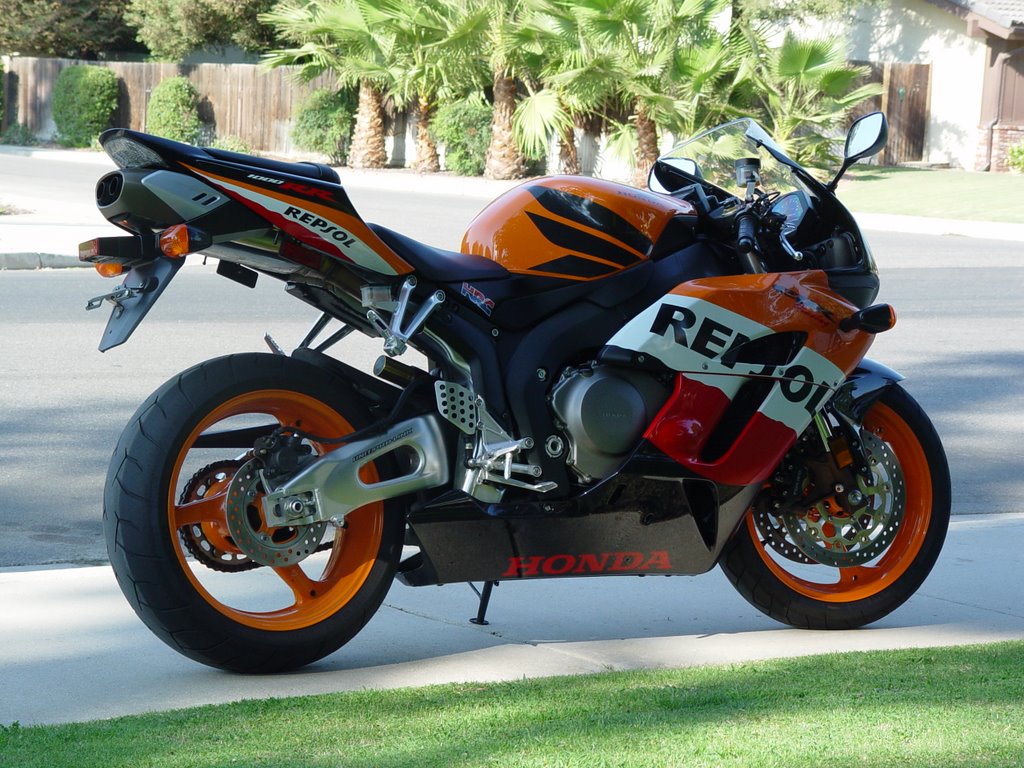
At the end I found a replacement for Christine, one which I have yet to name. Here's a photo of the bike: (click any photo to enlarge)
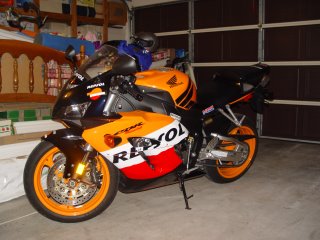
Here's a better photo taken by someone else :)

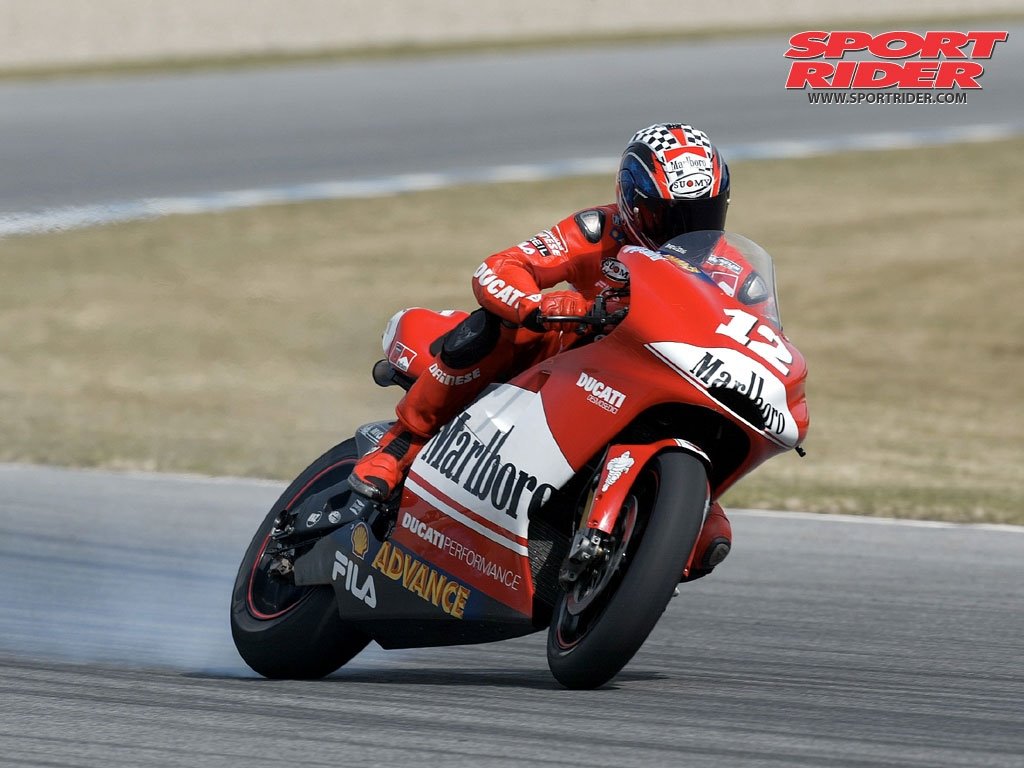
It's really just a CBR1000 with the Grand Prix bike color scheme. Here's the real McCoy, a GP bike with 220 horsepower (note the lack of turn signals, mirrors, and headlight on the racebike).

This bike still has *plenty* of power for me. I'm a little bit frightened of it, truth be told. I still don't have the aplomb to let it wail all the way through first gear - it accelerates so fast that it's mind-bending. And yet it's quiet and civilized if you want to ride it that way - as you must, 99% of the time :)
Christine used to go 110 mph on a good day, loud, shaky and full of drama. This bike goes 110 with *no* drama and without even breathing hard. It's incredibly competent at high speed. I suspect it would happily deliver 150 mph without any fuss. I may go out to the desert or a nearby track and find out.
One thing I like about the styling of the machine is that it doesn't have a huge muffler hanging off the right side. Instead it has this very clean undertail exhaust design.
First off, I took the month of August off work and pretty much stayed clear of the internet the entire time. I spent the time well, spending a great deal of time with my daughter, and also some with my brother and my mother. I also managed to get in a concert featuring Hinder, Chevelle, Three Day's Grace, and Nickelback.
At the end I found a replacement for Christine, one which I have yet to name. Here's a photo of the bike: (click any photo to enlarge)
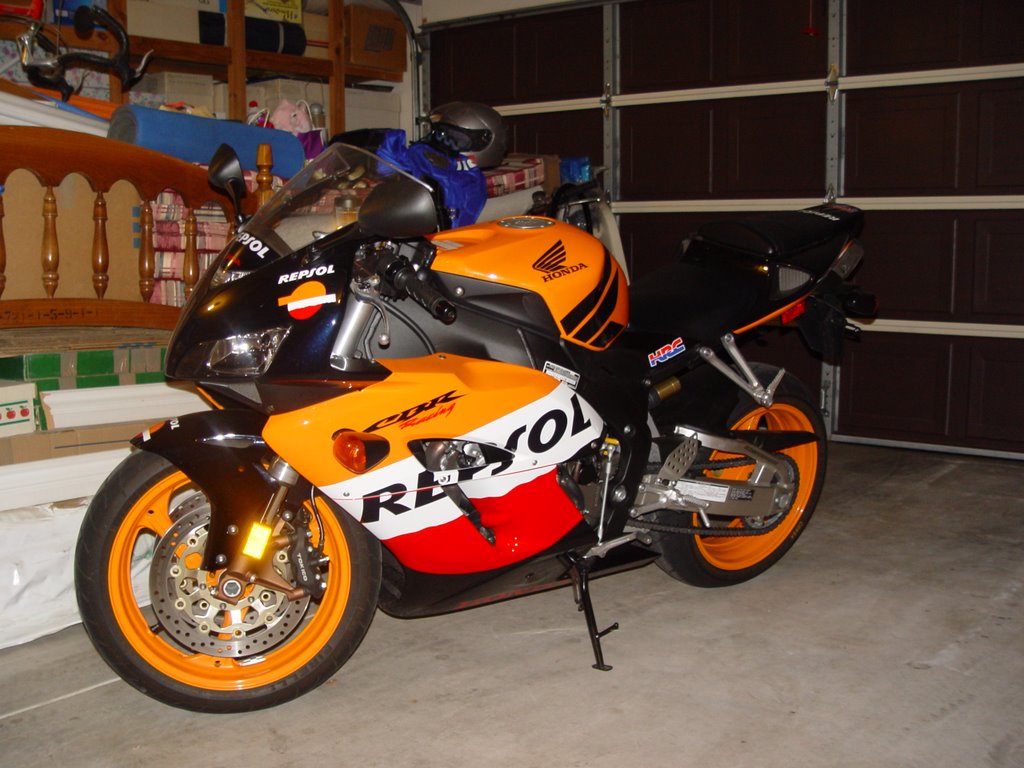
Here's a better photo taken by someone else :)
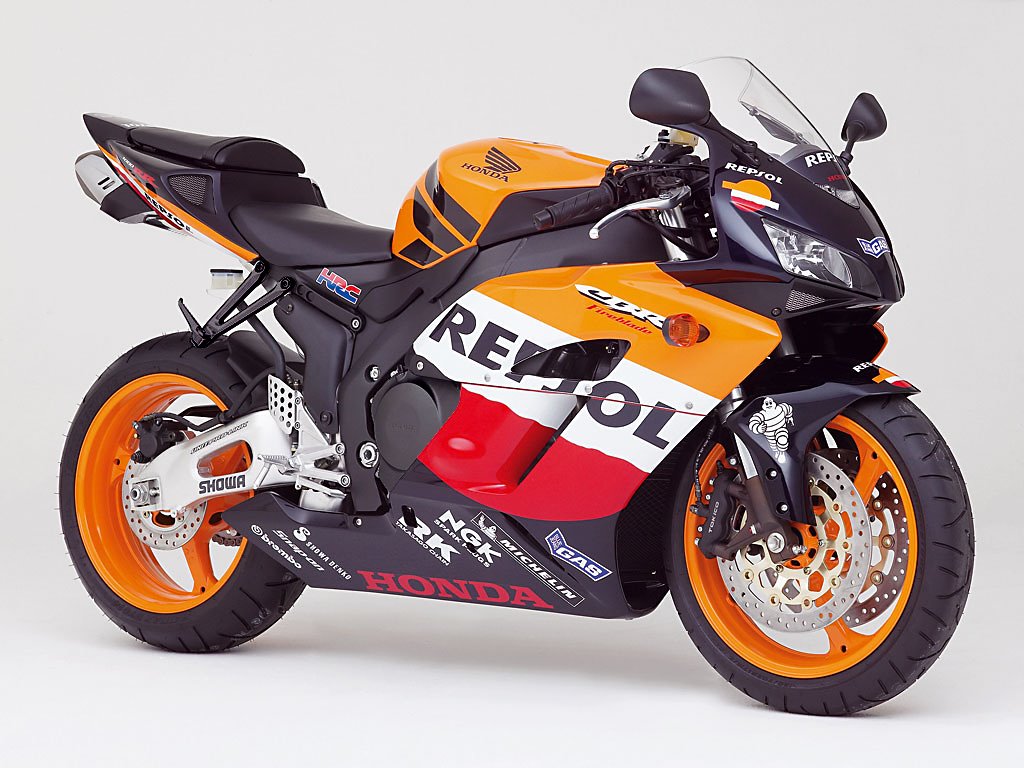
It's really just a CBR1000 with the Grand Prix bike color scheme. Here's the real McCoy, a GP bike with 220 horsepower (note the lack of turn signals, mirrors, and headlight on the racebike).

This bike still has *plenty* of power for me. I'm a little bit frightened of it, truth be told. I still don't have the aplomb to let it wail all the way through first gear - it accelerates so fast that it's mind-bending. And yet it's quiet and civilized if you want to ride it that way - as you must, 99% of the time :)
Christine used to go 110 mph on a good day, loud, shaky and full of drama. This bike goes 110 with *no* drama and without even breathing hard. It's incredibly competent at high speed. I suspect it would happily deliver 150 mph without any fuss. I may go out to the desert or a nearby track and find out.
One thing I like about the styling of the machine is that it doesn't have a huge muffler hanging off the right side. Instead it has this very clean undertail exhaust design.
Saturday, July 29, 2006
RIP Christine

Time for a blog update on an old friend (and nemesis) of mine, Christine.
Christine was my last motorbike, a 1979 Kawasaki KZ650. I bought that bike about a year ago from an optometrist in Palm Desert. He wasn't too mechanically inclined, and the bike needed some (more than some!) work, but the bike was fundamentally sound, and the price was right. Fuel cost for driving the truck to work was killing me, and I also just wanted some exhiliration.
So I brought the bike home and started commuting on it. At first I nearly crashed because the rear tire was so worn that it was squared off. As I got comfortable riding it and approached a curvy section of road, it started behaving erratically. First it wouldn't turn enough, then it turned too much! The rear tire was going up onto the "corner" between the sidewall and the flat spot where the tread was worn out. Scary!
After figuring out the handling problem, I decided to remove the rear tire myself and just take the rim into the motorcycle shop for tire replacement. I humped the bike up onto the center stand and pulled all the hardware off to remove the rear wheel. Turns out the bike wasn't up quite high enough to get the rear wheel out from under the fender. So I lifted the bike some more, kicking the wheel while supporting the bike. The bike rolled forward off the center stand, and fell to the ground without a rear wheel under it. On the way the exhaust pipe gouged a nasty gash in my shin, and afterwards it fell against the house, damaging my new stucco job. After telling a friend this story, he said I should name the bike "Christine".
After getting the new tire, Christine handled quite well. Very forgiving, predictable, and manageable. Not too fast though. She was heavy >500 lbs, and not too powerful, at 68 hp. But she was good enough for a commuter bike at 40 MPG - when she ran.
One day on the way home I stopped at an intersection, and when I tried to take off, the engine revved, but the bike went nowhere... like the clutch was pulled in. And I heard an odd metallic clinking sound. Not promising at all... So I picked up my truck and hauled Christine home. The front sprocked retaining nut had come loose and the front sprocket had fallen off the shaft. The metallic noise I'd heard had been the shaft spinning against the sprocket. No big deal - except the bike was down for a week while I waited for the replacement nut/lockwasher, and I was back to driving the 16 mpg F-250 4x4 turbodiesel.
There were a series of events where the bike slowly lost power and then eventually died and left me at the roadside. It was all fuel delivery - I could usually get it to run if I shook the bike around and sloshed fuel in the tank. It always seemed to happen when I was low (less than half a tank) on fuel. It also leaked fuel overnight out the carb overflows. I eventually figured out that the fuel petcock was sticking. It was supposed to open with engine vacuum, and close when the engine shut off. Instead it would stick open when the engine was off, overflowing the carbs. Worse, it would go shut at wide open throttle (low engine vacuum), and wouldn't re-open when engine vacuum returned to normal. It stranded me a lot until I got the petcock issue figured out and repaired.
When my petcock rebuild kit eventually arrived, I repaired the petcock but also decided to clean out the gas tank. I took it to work and ran a lot of water through it to rinse out any sediment, then I blew lots of air through it to drive off any moisture. One of the hoses I used must have been contaminated with something though. When I refilled the tank and started the bike, it barely would run, and it smoked like an old diesel engine. I wasted that entire tank of gas, and another gallon of gas that I used to rinse out whatever solvent or oil had gotten into the tank.
I decided to make Christine more pretty. Got rid of the silly fairing. Added cool blue LED bulbs to the speedo and tachometer. Put LED bulbs in the turn signals after one of them burned out. Replaced the side panels. Polished some of the rustier parts. Fixed a couple of oil leaks. Replaced the aluminum phillips screws with stainless steel allen head screws.
I was able to make her accelerate quite bit faster by advancing the timing and adjusting the points. The points were totally out of adjustment. It's amazing that she was even firing on two of the cylinders.
I bought a shim kit and valve cover gasket with the intention of adjusting the valve clearances - she had a tendency to backfire a bit, and I'm pretty sure that it was from one or more exhaust valve(s) hanging open.
And then the second to the last 'event' occurred. She died on me on the way home from work one morning after night shift. Just bogged down and sputtered to a stop. I realized that she had no juice. None of the lights was on, indicating a charging problem. So I checked the alternator coils and they seemed about right. I bought a rectifier/regulator to replace the seemingly faulty one. No dice.
So I did some further investigation and learned that maybe the alternator coils had a partial short. I ordered an upgraded aftermarket alternator. A nice three phase winding with a full three way bridge rectifier. The stuff took a frigging month to show up to the place I ordered it from. A beautiful riding month during which I was driving a truck with sucky fuel mileage.
While waiting for the parts to arrive, I cleaned the contacts through the ignition switch, as voltage drops through that switch can make the voltage regulator think it's delivering more voltage than it really is, causing its output to go low. Whatever the charging problem was, it was corrected by the new alternator and/or cleaning the ignition switch.
The next day I rode it to work for the first time in a month - and for the last time ever. Sure as heck, the headlight was *way* brighter, as were the gauges.
I was working nights, so the next evening I rode Christine to work (in 104 degree heat), and my riding partner blasted around a truck at 100+ mph, so I did the same.
Shortly after that, she began losing power and pinging a little. I eased off a bit, but it kept slowing down, dragging and dragging, sounding odd. Nothing I hadn't experienced with this bike a hundred times before, right? :)
"Fuel filter", I thought to myself, "I'll check it out when I get to work". I never made it to work. The rear wheel locked up as the engine seized. *Then* the fucking low oil pressure light came on. I coasted to the side of the road - something I've done *way* too many times on this goddam bike - and oil was blowing out the valve cover breather tubes. My riding partner rode off, oblivious!
A co-worker with a truck picked up me and my bike (again) and I spent part of the
night trying to free up the engine with penetrating oil in the cylinders and a 36" pipe wrench on the balancing wheel. Hahaha. I must have slagged it down pretty good, because it never budged.
Ya know I *really* wanted to get a sport bike, but convinced myself to go old and cheap instead. All I got was unreliability and unnecessary toil. Not again. Next time I'm getting a new bike. Right now I need to decide how deep to dig the hole to bury this one :)
There's a picture of me and Christine (back when she was rideable) here
Sunday, June 25, 2006
Burning down the house
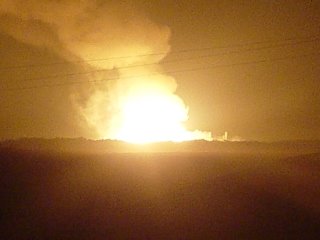
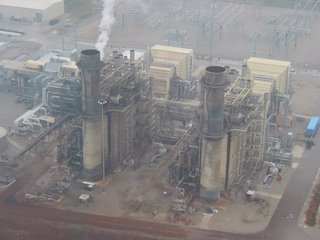
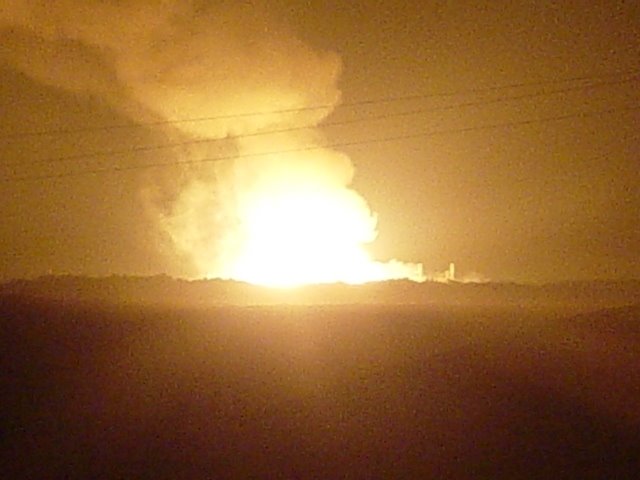
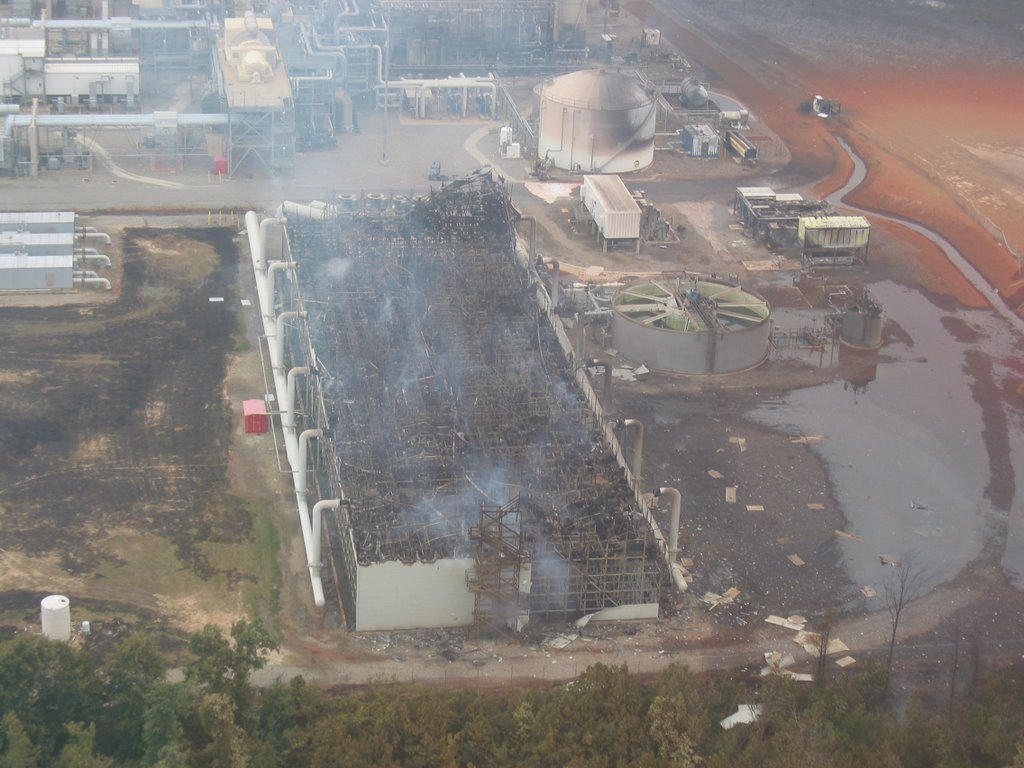
Gas pipeline rupture and fire in Texas. It happened just outside a power plant, on the fuel gas supply pipeline. The stacks can be seen just to the right of the fireball. Click any photo to enlarge
Aftermath. Amazingly no loss of life and only minor injuries occurred.
Cooling tower destroyed. Center of the blaze was apparently just off the frame to the right.
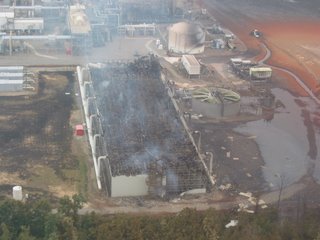
Aftermath. Amazingly no loss of life and only minor injuries occurred.

Cooling tower destroyed. Center of the blaze was apparently just off the frame to the right.

Stuff happens...
The previous post was about photos I've gathered of power plant damage due to accidents. Here are a few more.
Bad day at the power plant
I've had the good fortune to avoid involvement in accidents involving serious injury or fatalities, although I've lost some friends and acquaintances. The energies involved in electrical generation are almost incomprehensible when they are uncontrolled. Here are a few pictures I've acquired over the years.
Subscribe to:
Posts (Atom)